
A candidate accepts your offer letter, does the math on their phone, and messages you an hour later: “This isn’t what I agreed to. My in-hand is ₹15,000 short.” You didn’t lie to them. You just handed over a CTC figure without walking through the breakup — and now you’re doing damage control on day one.
This happens in almost every SME hiring cycle in India, because CTC (Cost to Company) and in-hand salary are not the same number, and most offer letters don’t explain the gap. If you’re an HR manager who’s tired of these conversations, this guide — and our free CTC salary calculator — will get you and your candidates on the same page before the offer even goes out.
TL;DR
- CTC includes basic pay, allowances, PF, gratuity provision and other employer costs — not all of it lands in the employee’s bank account.
- In-hand salary = Gross salary − (PF employee share + professional tax + TDS + other deductions).
- Under the Code on Wages 2019, basic pay + DA must be at least 50% of total CTC, which is reshaping how India Inc structures pay in 2026.
- Use a CTC to in-hand salary calculator to show candidates the real number in seconds, not after three back-and-forth emails.
What CTC Actually Means (and Why It Trips People Up)
CTC is the total amount your company spends on an employee in a year — salary components plus employer contributions like PF, ESI, gratuity provisioning, and any perks like meal cards or insurance premiums the company pays for. In-hand salary, by contrast, is what actually gets credited to the employee’s account every month, after deductions.
The confusion happens because employer contributions to PF and gratuity are money the employee never sees monthly — it either goes into a retirement corpus or sits as a provision, payable only on exit under specific conditions. A ₹9 lakh CTC offer can easily translate to a monthly in-hand of ₹58,000–₹62,000, not ₹75,000, and nobody explained the difference at offer stage.
CTC vs Gross Salary vs In-Hand Pay: The Real Differences
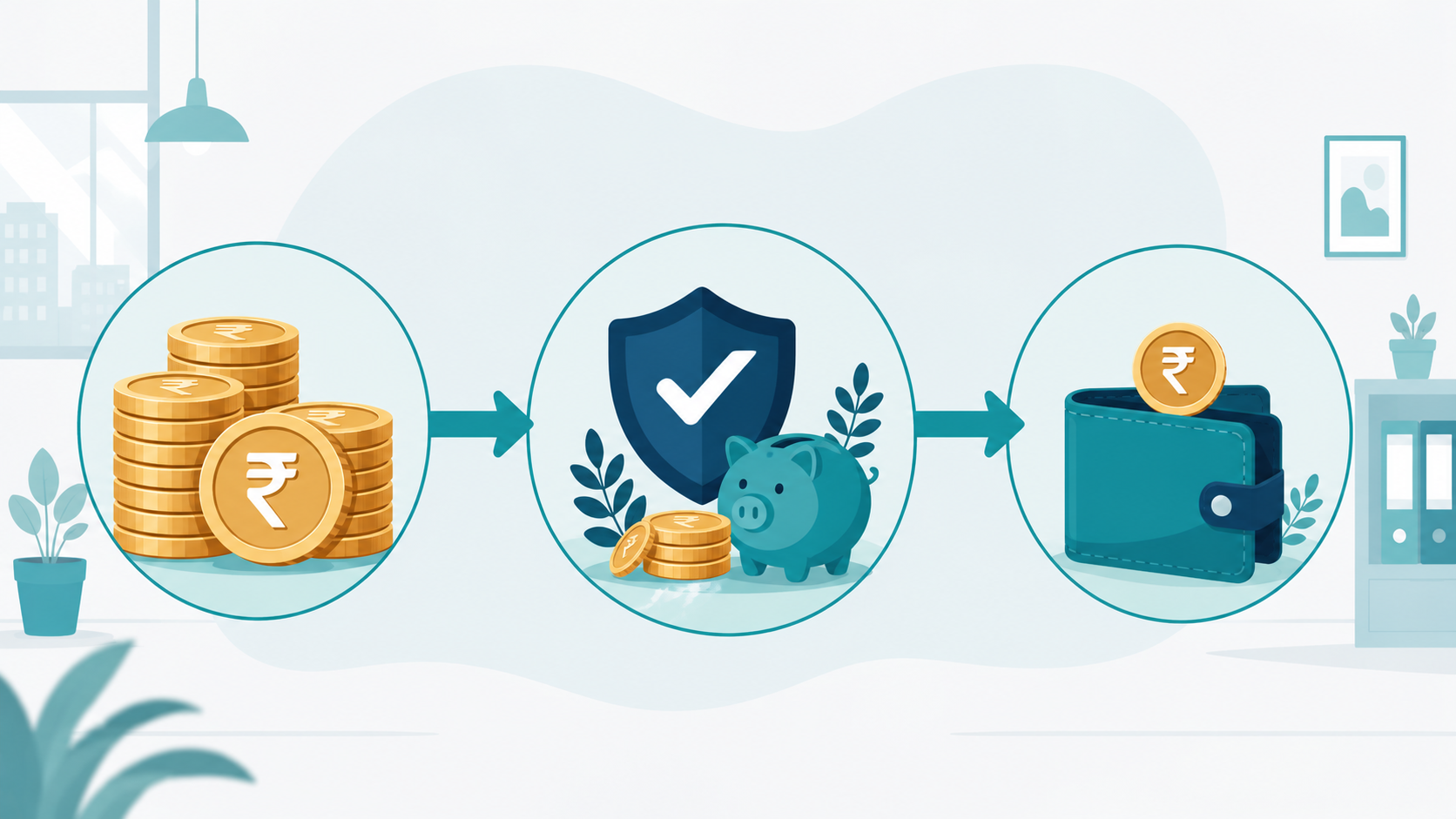
Here’s the breakdown HR managers should be showing candidates, not burying in an annexure:
| Component | Included in CTC? | Included in Gross? | Reaches employee monthly? |
|---|---|---|---|
| Basic Pay | Yes | Yes | Yes |
| HRA | Yes | Yes | Yes (partly tax-exempt) |
| Special Allowance | Yes | Yes | Yes |
| Employer PF contribution (12%) | Yes | No | No — goes to EPFO |
| Employee PF contribution (12%) | No (already in gross) | Yes | No — deducted |
| Gratuity provision | Yes | No | No — payable only on exit after 5 years |
| Professional Tax | No | N/A | No — deducted (state-specific) |
| TDS on salary | No | N/A | No — deducted per slab |
Simply put: In-hand salary = Gross salary − (Employee PF + Professional Tax + TDS + any other deductions like loan EMI or ESI). Gross salary itself is CTC minus employer-side contributions (PF, gratuity provisioning, employer ESI where applicable).
How to Structure a Salary Breakup Employees Won’t Feel Cheated By
The 50% Basic Pay Rule Under the New Labour Codes
The four labour codes, including the Code on Wages 2019, came into force on 21 November 2025. One rule every payroll team needs to internalise: wages (basic pay + dearness allowance + retaining allowance) must add up to at least 50% of total remuneration. If allowances — HRA, special allowance, and so on — push past 50%, the excess gets treated as “wages” for calculating PF, gratuity and other statutory dues.
Practically, this means companies that historically kept basic pay at 30-35% of CTC (to keep PF and gratuity liability low) are being pushed to restructure. Higher basic pay means higher PF deduction today, but a bigger retirement corpus and gratuity payout later. If you haven’t audited your salary structures against this rule yet, do it before your next appraisal cycle.
HRA: The Most Misunderstood Exemption
HRA exemption under Section 10(13A) of the Income Tax Act is the lowest of three amounts: actual HRA received, 50% of (basic + DA) for the four metro cities — Delhi, Mumbai, Kolkata, Chennai — or 40% for every other city, and actual rent paid minus 10% of (basic + DA). This exemption is only available under the old tax regime; the new regime doesn’t allow it at all, which is another reason employees need to see both regimes compared before they pick one for the year.
CTC to In-Hand Salary: Step-by-Step Calculation
- Start with annual CTC — the number in the offer letter.
- Subtract employer PF contribution — 12% of basic pay (or ₹1,800/month if basic exceeds the ₹15,000 statutory wage ceiling and the employer restricts to the ceiling).
- Subtract gratuity provisioning — typically 4.81% of basic pay, provisioned but not paid monthly.
- Subtract any employer-paid insurance/perks bundled into CTC — to arrive at gross salary.
- From gross salary, deduct employee PF (12% of basic), professional tax (state-specific, usually ₹150–₹300/month), and TDS as per the chosen tax regime.
- What remains is monthly in-hand salary — the number that should match what the candidate expects.
Worked Example: ₹9,00,000 CTC Breakup
Take a Gurugram-based employee on a ₹9 lakh CTC with basic pay set at 50% (₹4,50,000/year, per the new wage rule):
| Component | Annual (₹) | Monthly (₹) |
|---|---|---|
| Basic Pay | 4,50,000 | 37,500 |
| HRA (50% of basic, metro) | 2,25,000 | 18,750 |
| Special Allowance | 1,44,600 | 12,050 |
| Employer PF (12% of basic) | 54,000 | 4,500 |
| Gratuity Provision (4.81%) | 21,645 | 1,804 |
| Employer ESI (if applicable) | 4,755 | 396 |
| Gross Salary | 8,19,600 | 68,300 |
| Less: Employee PF (12% of basic) | 54,000 | 4,500 |
| Less: Professional Tax (Haryana slab) | 2,400 | 200 |
| Less: TDS (new regime, approx.) | 18,000 | 1,500 |
| In-Hand Salary | 7,45,200 | ~62,100 |
That’s a real gap of nearly ₹6,400 a month between what the offer letter says and what lands in the account — exactly the kind of surprise a quick run through the CTC salary calculator prevents before the candidate signs.
Where HR Managers Get the Breakup Wrong
A few mistakes we see repeatedly across SMEs with 10–500 employees:
- Quoting only the CTC figure verbally and letting the candidate assume it’s the take-home — always share a written breakup at offer stage.
- Ignoring the 50% wage rule post-November 2025 and continuing with old basic-pay ratios, which invites compliance trouble during audits.
- Mixing up gross and CTC in payslips, which confuses employees every time they compare payslip to offer letter.
- Not accounting for state-specific professional tax when an employee relocates between offices in different states.
- Forgetting the new tax regime is now default — if an employee doesn’t actively opt for the old regime, TDS gets calculated on the new slabs, which changes take-home significantly if they were expecting HRA exemption.
Frequently Asked Questions
Is CTC the same as gross salary?
No. CTC includes employer contributions like PF and gratuity provisioning that never reach the employee monthly. Gross salary is CTC minus those employer-side costs, and in-hand pay is gross minus employee deductions like PF, professional tax and TDS.
Why is my in-hand salary lower than expected for my CTC?
Because CTC bundles in costs your employer pays on your behalf — PF contribution, gratuity provision, sometimes insurance — that don’t show up in your bank account every month. A ₹9 LPA CTC can realistically mean ₹60,000–₹65,000 in-hand, not ₹75,000.
Does the new Code on Wages change my salary structure?
Yes. Since the labour codes took effect on 21 November 2025, basic pay plus dearness allowance must be at least 50% of total remuneration, which is pushing many companies to restructure pay and, in turn, PF and gratuity calculations.
Can I claim HRA exemption under the new tax regime?
No. HRA exemption under Section 10(13A) is only available under the old tax regime. If you’ve moved to the new regime — now the default — you lose this exemption regardless of how much rent you pay.
How much PF gets deducted from my salary?
Both employer and employee contribute 12% of basic pay to EPF, subject to a statutory wage ceiling of ₹15,000/month for mandatory contribution, though many employers contribute on full basic voluntarily.
Is professional tax the same across India?
No, professional tax is a state-levied tax with its own slabs and maximum caps — some states like Haryana and Delhi don’t levy it at all, while others like Maharashtra and Karnataka do. Check our professional tax calculator for state-wise rates.
Get the Breakup Right, Every Time
Whether you’re finalising an offer letter or explaining a payslip, a five-minute run through the free CTC to in-hand salary calculator saves you the awkward follow-up email. Pair it with our gratuity calculator and PF & ESI calculator to sanity-check the rest of the CTC — and if you’re structuring pay for leave encashment or full & final settlements too, EZHRM’s free HR calculators and payroll software for Indian SMEs handle the compliance math so your team doesn’t have to.
For more practical guides like this one, browse the EZHRM blog.
Sources: Income Tax Department, Government of India; Employees’ Provident Fund Organisation (EPFO).