
Your Bangalore office pays PT like clockwork, and then Maharashtra sends a late-fee notice because nobody realised the Mumbai branch needed a separate PTEC registration on top of the PTRC you already had. If your company has people on payroll in more than one state, this is one of those compliance gaps that stays invisible right up until it isn’t — because professional tax isn’t one law, it’s a different law in every state that levies it.
Here’s what actually trips up HR and payroll teams on PT in 2026, and how to stop it from happening on your watch.
TL;DR
- Professional tax is a state-level tax, capped at ₹2,500 per person per year under Article 276 of the Constitution — no state can charge more, regardless of salary.
- Employers need two separate certificates in most PT states: PTEC (tax on the business itself) and PTRC (for deducting and depositing employee PT).
- Due dates vary sharply by state — Maharashtra is monthly by the 15th, Karnataka by the 20th, West Bengal is annual by 31 July with quarterly GRIPS filings.
- Late payment penalties stack: interest (1–1.25% per month) plus a flat late-return fee or a percentage penalty on the tax due.
What Professional Tax Actually Is
Professional tax (PT) is a tax levied by state governments on salaried individuals, professionals, and businesses, under the power granted by Article 276 of the Constitution of India. Not every state levies it — Haryana, Delhi, and Rajasthan currently don’t — but where it applies, it’s compulsory, and the employer is responsible for deducting it from salary and depositing it with the state’s commercial tax department. The employer also pays PT on its own existence as a business entity, separate from what it deducts from employees.
That last sentence is where most of the confusion starts. Run any employee’s numbers instantly with our professional tax calculator to see the monthly deduction for your state before we get into the compliance side.
PTEC vs PTRC: The Distinction HR Managers Miss
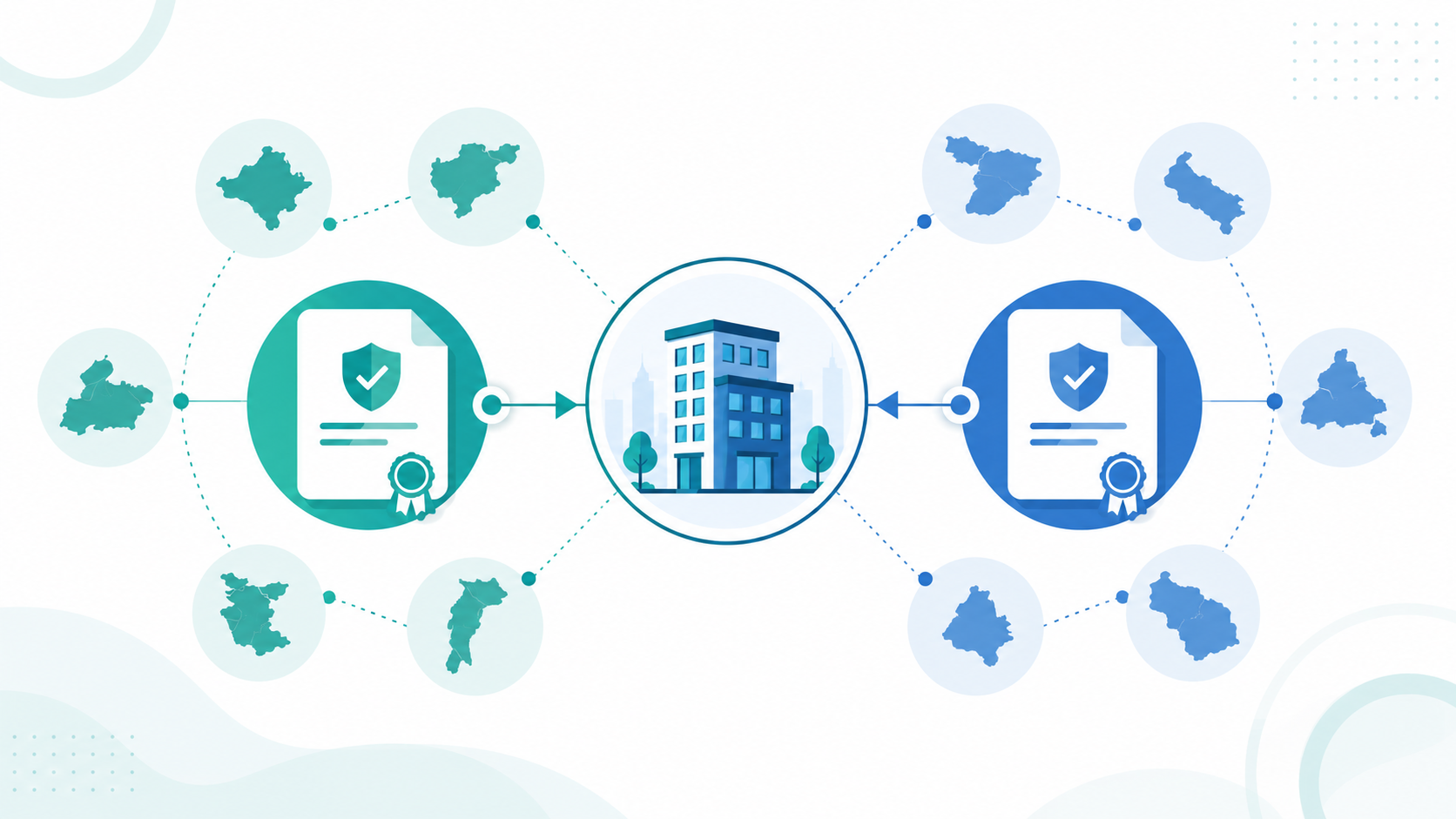
Most PT states (Maharashtra and Karnataka are the clearest examples) require two separate registrations:
| Registration | Who It’s For | What It Covers |
|---|---|---|
| PTEC (Enrollment Certificate) | The business/employer itself, and self-employed professionals | Tax on carrying on a profession or business — a flat annual amount, paid by the company regardless of employee count |
| PTRC (Registration Certificate) | Employers with salaried staff above the exemption threshold | Tax deducted from employee salaries and remitted monthly/annually by the employer |
A company can owe PTEC even with zero employees on PT-eligible salaries, and needs PTRC the moment it starts deducting PT from even one employee. Companies expanding into a new state routinely register for only one of the two and find out about the gap during an audit, not before.
State-Wise Filing Deadlines for 2026
This is where a single national due date would help everyone — and where reality refuses to cooperate:
| State | PTRC Payment Due | Annual Return |
|---|---|---|
| Maharashtra | 15th of the following month | PTEC annual payment by 30 June |
| Karnataka | 20th of the following month | PTEC annual return by 30 April |
| West Bengal | Full-year payment by 31 July | Quarterly returns via the GRIPS portal |
Other PT states — Telangana, Andhra Pradesh, Gujarat, Madhya Pradesh, Tamil Nadu — each run their own monthly or quarterly cycle through their respective commercial tax portals. If you run payroll across three or more states, this alone justifies putting PT tracking inside your payroll software rather than a shared spreadsheet someone updates from memory.
What Happens When You Miss a Deadline
Late PT payment isn’t a soft penalty anywhere it applies:
- Maharashtra: ₹1,000 flat fee for a return filed within one month of the due date, ₹2,000 beyond that, plus 1.25% monthly interest and a further 10% penalty on the unpaid tax.
- Karnataka: 1.25% interest per month on the outstanding amount from the due date.
- West Bengal: 1% interest per month, plus a penalty of up to 50% of the tax due for continued default.
None of these are one-time hits — interest compounds monthly, so a payment that’s three months late costs meaningfully more than the tax itself in some states.
Slabs Employers Actually Get Wrong
A few state-specific quirks catch even experienced payroll teams off guard:
| State | Key Slab Detail |
|---|---|
| Maharashtra | ₹7,501–₹10,000/month: ₹175/month. February is charged ₹300 instead of ₹200 so the annual total lands exactly at ₹2,500 — a rule payroll teams routinely miss. |
| Maharashtra | Women earning up to ₹25,000/month are fully exempt — a gender-specific carve-out that generic slab tables often omit. |
| Karnataka | Exemption threshold was raised from ₹15,000 to ₹25,000/month effective 1 April 2025, replacing the earlier three-tier slab with a single flat ₹200/month above the new threshold. Payroll configs set up before that date frequently weren’t updated. |
| West Bengal | Runs eight separate salary brackets — more granular than most states, and easy to misapply if you’re using a one-size-fits-all slab sheet. |
Cross-check every state’s current slab against our professional tax calculator before running payroll each month — state rules change quietly and a stale slab table is the single biggest source of PT under- or over-deduction.
Who Needs to Register — A Quick Checklist
Before you assume PT doesn’t apply to your business, run through this:
- Does your company have a registered office, branch, or place of business in a state that levies PT (all states except Haryana, Delhi, Rajasthan, and a handful of Union Territories)? If yes, PTEC is almost certainly required, even with a skeleton crew.
- Do any employees earn above that state’s PT exemption threshold? If yes, you need PTRC to deduct and remit their tax.
- Have you registered separately in every state where you employ people, or only where your head office sits? PT registration doesn’t travel with a single central certificate — each state needs its own.
- Has your HR or accounts team checked the current year’s slab table for each state, not last year’s? Thresholds and rates do get revised, sometimes mid-year.
- Is someone tracking each state’s specific due date, or is PT lumped into a single “month-end statutory payments” reminder that doesn’t distinguish between a 15th and a 20th deadline?
If you answered “not sure” to more than one of these, it’s worth an internal audit before the next assessment cycle does it for you.
Common Mistakes HR Managers Make with PT
- Registering for PTRC but skipping PTEC — or the reverse — when opening a branch in a new state.
- Using last year’s slab table after a mid-year revision, like Karnataka’s April 2025 threshold change.
- Missing the February adjustment in Maharashtra that brings the annual total to exactly ₹2,500.
- Applying uniform deduction without checking gender-specific or disability-linked exemptions that some states carry.
- Treating PT as a flat national rule instead of tracking each state’s due date and portal separately — the single biggest driver of late fees for multi-state employers.
Frequently Asked Questions
Is professional tax the same across all Indian states?
No. PT is levied and administered by individual state governments, so rates, slabs, exemptions, and due dates differ from state to state. Some states, including Haryana, Delhi, and Rajasthan, don’t levy PT at all.
What’s the maximum professional tax anyone can be charged?
Article 276 of the Constitution caps professional tax at ₹2,500 per person per year, regardless of income or the state involved.
Do I need both PTEC and PTRC?
If your business has employees whose salary crosses the state’s PT threshold, you generally need PTRC to deduct and remit their tax, and PTEC to cover the tax on the business itself. Requirements vary by state, so check the specific state’s rules before assuming one covers the other.
What happens if I pay professional tax late?
Most states charge monthly interest (typically 1–1.25%) plus either a flat late-filing fee or an additional percentage penalty on the unpaid amount. Habitual default can also trigger closer scrutiny during assessments.
Is professional tax deducted before or after income tax?
PT is deducted from gross salary as a statutory deduction, and the amount paid is allowed as a deduction from taxable salary income under the Income Tax Act — so it reduces your income tax liability slightly, separate from how it’s calculated.
Do all employees have to pay professional tax?
Only if their salary crosses the state’s exemption threshold. Thresholds vary widely — Karnataka’s is now ₹25,000/month, while Maharashtra’s PT starts as low as ₹7,501/month for most employees.
Making Multi-State PT Compliance Less Painful
If you’re running payroll in one state, PT is a minor monthly line item. The moment you add a second or third state, it becomes a genuine compliance workload — separate registrations, separate portals, separate due dates, separate penalty structures. Most HR teams we talk to at 10–500 employee companies handle this manually until the first missed deadline forces a rethink.
Our professional tax calculator gets you the right number instantly for any state. If you’re also tracking CTC breakdowns or PF and ESI alongside PT, our full set of free HR calculators covers the rest of the statutory stack — start with the CTC salary calculator or the bonus calculator for a full payslip check. For more compliance breakdowns like this, browse the EZHRM blog.
If you’re tired of tracking PT due dates across states in a spreadsheet, EZHRM automates PT calculation, deduction, and filing prep as part of full payroll compliance — try the free calculator first and see how much of this you can hand off.
Sources: Income Tax Department – incometax.gov.in, Ministry of Labour & Employment – labour.gov.in