
Your line supervisor in Bahadurgarh has 61 earned leave days sitting in his account. Under the leave policy you wrote in 2019, all 61 roll into next year and nobody thinks about it again. Under the OSH Code, 31 of those days have to be paid out in cash — and he can demand it.
The leave encashment rules in India for 2026 changed the day the four labour codes came into force on 21 November 2025, and the leave provisions are one of the few parts of the Codes that do not wait for final rules to be notified. They apply now. Here’s what changed, what your state Shops Act still overrides, and how to cost it before the year-end crunch.
TL;DR
- Under Section 32 of the OSH Code, 2020, a worker earns 1 day of leave for every 20 days worked, once they’ve worked 180 days in a calendar year (down from 240 days under the Factories Act).
- Carry-forward is capped at 30 days. Anything above 30 must be encashed — that’s the worker’s right, not the employer’s option.
- Workers can also demand encashment of their full balance at the end of the calendar year, with no upper limit on the amount.
- On exit, encashment must be paid within 2 days of resignation, discharge or dismissal — and within 2 months for superannuation or death.
- Tax: encashment during service is fully taxable. Encashment at exit is exempt up to ₹25,00,000 lifetime for private-sector staff under Section 10(10AA).
What Leave Encashment Means Under the OSH Code
Leave encashment is the wage an employer pays in place of earned leave an employee has accumulated but not taken. Until 2025, whether you had to pay it at all — and how much could pile up first — depended entirely on which state Shops Act or the Factories Act applied to you. The OSH Code puts a single central floor under all of it.
Section 32 sets the accrual: one day of leave for every 20 days of work for adult workers (one day per 15 days for adolescents), once the worker crosses 180 days of work in the calendar year. Layoff, maternity leave and annual leave already availed all count towards that 180 days. And unlike the Factories Act, the worker doesn’t wait until the following year to use what they earned.
One quiet change that will annoy payroll teams: holidays falling inside a leave spell, or prefixed and suffixed to it, are excluded from the leave availed. If your HRMS has been counting the Sunday in the middle of a five-day leave as an earned leave day, that practice is now non-compliant — worth auditing your leave management configuration before the next cycle.
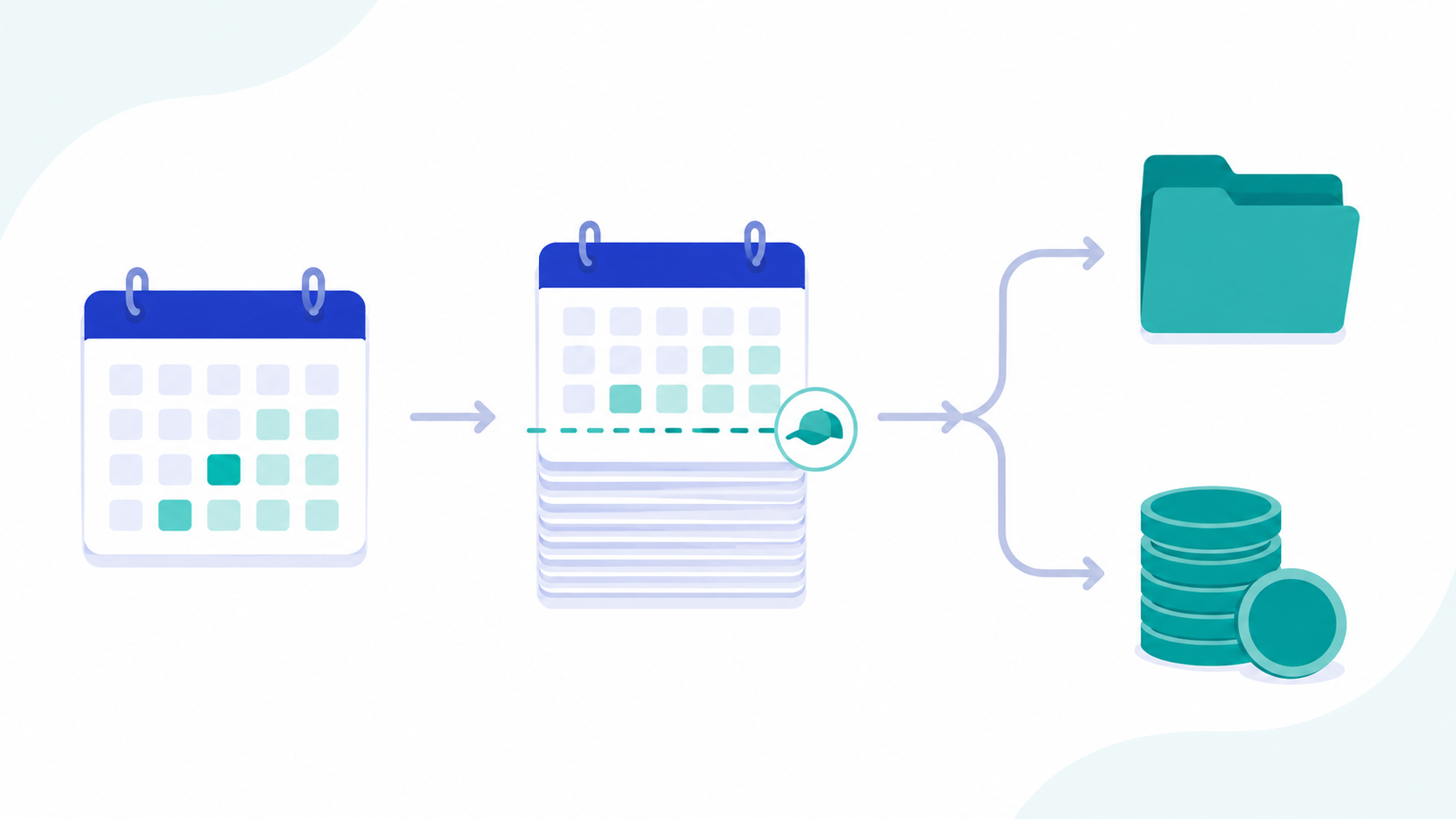
The 30-Day Cap and the Two Encashment Triggers
This is the part most leave policies get wrong. The OSH Code creates two separate in-service encashment rights, and they work differently.
| Trigger | When it applies | How much can be encashed | Employer discretion? |
|---|---|---|---|
| Year-end demand | End of calendar year, if the worker asks | Any amount — up to the entire balance | No. Worker’s option to exercise; employer must pay |
| Excess over 30 days | When carry-forward to the next year would exceed 30 days | Only the excess above 30 days | No |
| Leave refused by employer | Worker applied, leave was not granted | Carried forward with no 30-day limit | N/A — must be carried forward |
| On cessation | Resignation, discharge, dismissal, superannuation, death | Full entitlement as on last day | No. Statutory |
Read that second row again — it’s the one with a cash-flow consequence. If a worker has 61 days accumulated on 31 December, 30 carry forward and 31 days become payable. Multiply that across a 200-person plant where leave has quietly accumulated for six years and you have a serious one-time liability. Manufacturing and logistics employers feel this hardest; if that’s you, our notes on HR software for manufacturing cover the shop-floor side of it.
The refused-leave exception is the other trap. If your supervisors have been rejecting leave applications during peak season — and let’s be honest, they have — those days sit outside the 30-day cap entirely and keep accumulating. You cannot cap what you refused to grant. Keep the rejection trail in your system.
Post-exit payment timelines are tight
Where an employee is discharged, dismissed, resigns or dies mid-year, encashment is calculated at 1 day per 20 days worked even if they never crossed the 180-day threshold — and that’s separate from whatever was already accumulated. Payment is due within two days of discharge, dismissal or resignation, and within two months for superannuation or death. Two days is not much runway if your full and final settlement process still involves three signatures and a printout.
Where Your State Shops Act Still Wins
The Code does not wipe out state law. Section 120 says the Code overrides anything inconsistent with it — but with a proviso: where an award, agreement or contract gives the employee something more favourable, they keep the better deal. So you run a benefit-by-benefit comparison, not a wholesale replacement:
- Delhi: 15 days after 12 months of continuous service, accumulation up to 45 days — more generous than the Code’s 30-day carry-forward, so it holds.
- Maharashtra: accumulation capped at 45 days; encashment available where the employer refuses sanctioned leave.
- Karnataka: 1 day per 20 days worked with no precondition, but carry-forward capped at 20 days — less favourable, so the Code’s 30 days prevails.
The Supreme Court settled the principle in Pepsico India Holding P. Ltd v. Grocery Market & Shops Board (2016): where state law is more favourable, employees keep it even while drawing other benefits from the central statute.
Two scoping distinctions matter. The OSH Code’s leave provisions apply to workers, not all employees — managerial and supervisory staff above the wage threshold stay with the Shops Act. And sick and casual leave find no mention in the OSH Code at all, so state Shops Acts continue to govern those. Only earned/privilege leave is in play.
The Formula, and Why Your Per-Day Rate Just Went Up
The calculation itself hasn’t changed:
Leave Encashment = (Basic + DA) ÷ Days in Month × Number of Encashable EL/PL Days
Take a machine operator on ₹34,000 basic and ₹6,000 DA, with 31 encashable days after the 30-day carry-forward:
- Per-day rate (30-day divisor): ₹40,000 ÷ 30 = ₹1,333
- Encashment: ₹1,333 × 31 = ₹41,323
- Same case on a 26-day divisor: ₹1,538 × 31 = ₹47,692
Pick one divisor, write it into the policy, apply it company-wide. Switching between 26 and 30 depending on who’s asking is how you end up in a labour inspector’s file.
The bigger 2026 effect is the Code on Wages definition of “wages”, which requires basic-type components to be at least 50% of total remuneration. If your structures were built the old way — 30% basic, everything else in allowances — restructuring pushes the encashment base up sharply. The same 31 days that cost ₹41,323 today can cost 60–70% more once basic is corrected. Model it with the CTC salary calculator before you finalise next year’s budget, then run the payout through the leave encashment calculator.
Tax Treatment: The ₹25 Lakh Rule
The tax position is independent of the labour codes and trips people up constantly.
| Scenario | Government employee | Non-government employee |
|---|---|---|
| Encashed during service | Fully taxable as salary | Fully taxable as salary |
| Encashed on retirement / resignation | Fully exempt | Exempt up to ₹25,00,000 (lifetime) |
| Paid to legal heir on death in service | Not taxable in the hands of the heir | |
The ₹25 lakh ceiling comes from CBDT Notification No. 31/2023 dated 24 May 2023, effective 1 April 2023, replacing the ₹3,00,000 limit that had stood since 2002. It is a lifetime cap across all employers — if a mid-career hire already claimed ₹8 lakh at a previous exit, only ₹17 lakh is left. Ask for that in writing during F&F; you’re relying on the employee’s declaration, and Form 16 carries your signature.
Note what the 30-day cap does here: because the Code now forces excess leave to be encashed during service, more of the payout falls into the fully-taxable bucket instead of the exempt-at-exit one. Employees sitting on 60-day balances hoping for a tax-free retirement payout will not be happy. Tell them before December, not after.
What HR Managers Get Wrong
- Treating the 30-day cap as optional. “Our policy says lapse after 45 days” is not a defence against a statutory entitlement.
- Assuming the Code replaced the Shops Act. Run the more-favourable test per benefit, and remember sick and casual leave never entered the Code.
- Counting intervening holidays as leave. Explicitly excluded under Section 32 — and usually set wrong in the HRMS.
- Encashing on gross salary. The base is Basic + DA. Not gross, not CTC.
- Missing the 2-day F&F clock while running a 30–45 day settlement cycle.
- No provisioning entry. If your books carry no leave liability, December’s encashment lands as an unbudgeted expense.
Your 2026 Leave Policy Rewrite: 7-Point Checklist
- Pull current EL/PL balances and flag everyone above 30 days.
- Split headcount into “workers” (OSH Code) and others (Shops Act).
- Run the more-favourable comparison against your state Shops Act and document the conclusion.
- Fix HRMS accrual to 1 day per 20 days worked, with the 180-day gate.
- Turn off holiday-counting inside leave spells.
- Lock one divisor (26 or 30) and state it in the policy.
- Book a leave encashment provision in the FY 2026-27 budget and compress your F&F cycle to two days.
If you’re doing this alongside gratuity provisioning, the gratuity calculator and the rest of our free HR calculators will save you a morning of spreadsheet work.
FAQ
Is leave encashment mandatory in India in 2026?
Yes, in defined situations. Under Section 32 of the OSH Code, leave beyond the 30-day carry-forward limit must be encashed, workers can demand encashment of their balance at the end of a calendar year, and encashment on exit is compulsory. Employers cannot make accumulated earned leave simply lapse.
How many earned leave days can be carried forward under the OSH Code?
Thirty days. Any balance above 30 days at the end of the calendar year must be paid out in cash. The exception is leave the worker applied for but was refused — that carries forward without any limit, so keep records of rejected leave applications.
Is leave encashment taxable in India?
Encashment received while still employed is fully taxable as salary income, with no exemption. Encashment at retirement or resignation is exempt for non-government employees up to ₹25,00,000 as a lifetime limit across all employers, under Section 10(10AA) read with CBDT Notification 31/2023. Government employees get full exemption.
What is the leave encashment formula?
Leave encashment = (Basic Salary + Dearness Allowance) ÷ days in the month × number of encashable earned leave days. Use 26 or 30 as the divisor consistently across your organisation. Gross salary, HRA and special allowances are not part of the base.
When must leave encashment be paid after resignation?
Within two days of the date of discharge, dismissal or resignation. For superannuation or death in service, the deadline is two months. This is materially tighter than the 30–45 day settlement cycles most Indian SMEs currently run.
Do sick leave and casual leave have to be encashed?
No. The OSH Code covers only annual leave with wages — earned or privilege leave. Sick leave and casual leave are not mentioned in the Code at all and continue to be governed by your state Shops & Establishments Act, which in most states does not require encashment.
Getting Ahead of the December Crunch
The cleanest way to handle this is to know your exposure now rather than in the last week of December — run your actual balances through the free leave encashment calculator and hand Finance a number they can provision against. EZHRM tracks accrual, carry-forward caps and encashment eligibility automatically for Indian SMEs, so the 30-day rule enforces itself instead of living in someone’s spreadsheet. More practical breakdowns like this one are in our HR guides.
Sources: Ministry of Labour & Employment — Occupational Safety, Health and Working Conditions Code, 2020, Sections 32 and 120; Income Tax Department — Section 10(10AA), CBDT Notification No. 31/2023.